
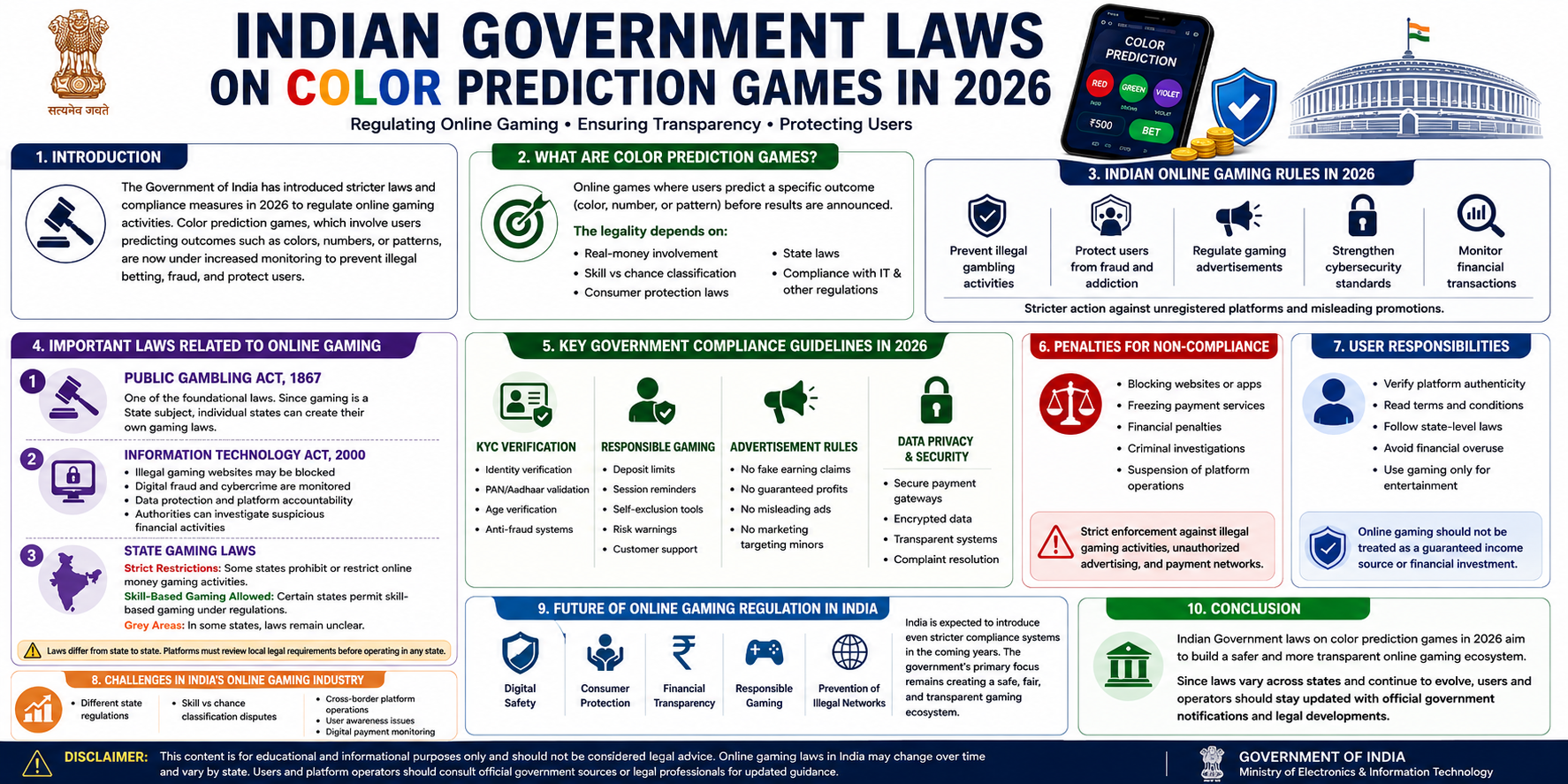
The online gaming industry in India has experienced massive growth over the last few years. With millions of users participating in mobile-based gaming platforms, the Government of India has introduced stricter laws and compliance measures to regulate online gaming activities in 2026.
Among the most discussed categories are color prediction games, which involve users predicting outcomes such as colors, numbers, or patterns. Due to concerns related to financial risk, illegal betting, cyber fraud, and user protection, Indian authorities have increased monitoring and regulatory oversight of such platforms.
The Indian government now focuses on creating a safer digital gaming environment while ensuring that operators comply with national and state-level regulations.
What Are Color Prediction Games?
Color prediction games are online games where users select or predict a specific outcome before the result is announced. These games are commonly available through websites and mobile applications.
In India, the legal status of these platforms depends on several factors, including:
- Whether the platform involves real-money participation
- State-specific gaming laws
- Classification as a game of skill or game of chance
- Compliance with IT and consumer protection regulations
The legality of these games may differ from one Indian state to another.
Indian Online Gaming Rules in 2026
The Government of India introduced updated online gaming regulations to improve transparency and user safety in the digital gaming sector. The new framework focuses on:
- Preventing illegal gambling activities
- Protecting users from fraud and addiction
- Regulating gaming advertisements
- Strengthening cybersecurity standards
- Monitoring financial transactions
Authorities have also increased action against unregistered gaming platforms and misleading promotional campaigns.
Important Laws Related to Online Gaming in India
1. Public Gambling Act, 1867
The Public Gambling Act remains one of the foundational laws related to gambling activities in India. Although it was created before digital gaming existed, many states still use it as a reference for regulating betting-related activities.
However, because gaming is a State subject under the Indian Constitution, individual states can create their own gaming laws.
2. Information Technology Act, 2000
The IT Act plays a major role in regulating online platforms and digital activities in India. Under the updated rules:
- Illegal gaming websites may be blocked
- Digital fraud and cybercrime are monitored
- Platforms must follow data protection standards
- Authorities can investigate suspicious financial activities
Gaming operators are expected to maintain secure systems and transparent operations.
3. State Gaming Laws
Different Indian states follow different approaches toward online gaming:
States with Strict Restrictions
Some states prohibit or heavily restrict online money gaming activities involving prediction or chance-based formats.
States Allowing Skill-Based Gaming
Certain states allow online gaming if the game is considered skill-based and complies with local regulations.
Grey Areas
In some regions, laws remain unclear regarding online prediction-based games.
Because of these differences, platforms must review local legal requirements before offering services in any state.
Key Government Compliance Guidelines in 2026
KYC Verification
Gaming platforms are now expected to implement:
- Identity verification
- PAN or Aadhaar validation
- Age verification systems
- Anti-fraud mechanisms
These steps help reduce fake accounts, financial fraud, and underage participation.
Responsible Gaming Measures
The government encourages responsible gaming practices such as:
- Deposit limits
- Session reminders
- Self-exclusion tools
- Financial risk warnings
- Customer support systems
These measures are designed to protect users from excessive gaming behavior.
Advertisement & Promotion Rules
Online gaming advertisements must avoid:
- Fake earning claims
- Guaranteed profit promises
- Misleading promotional messages
- Marketing targeting minors
Influencers and affiliates promoting gaming platforms may also face stricter compliance checks.
Data Privacy & Security
Gaming operators are required to maintain:
- Secure payment gateways
- Encrypted user data
- Transparent transaction systems
- Complaint resolution mechanisms
Platforms that fail to protect user information may face penalties or restrictions.
Penalties for Non-Compliance
The Indian government has strengthened enforcement against illegal gaming activities.
Possible actions include:
- Blocking websites or applications
- Freezing payment services
- Financial penalties
- Criminal investigations
- Suspension of platform operations
Authorities may also take action against unauthorized advertising campaigns and payment networks connected to illegal gaming services.
User Responsibilities
Users participating in online gaming platforms should:
- Verify platform authenticity
- Read platform terms carefully
- Follow state-level laws
- Avoid financial overuse
- Use gaming only for entertainment purposes
Online gaming should not be treated as a guaranteed income source or financial investment.
Challenges in India’s Online Gaming Industry
Despite the updated framework, several challenges remain:
- Different state regulations
- Skill vs chance classification disputes
- Cross-border platform operations
- User awareness issues
- Digital payment monitoring
The legal landscape continues to evolve as authorities adapt to the fast-growing online gaming sector.
Future of Online Gaming Regulation in India
India is expected to introduce even stricter compliance systems in the coming years. The government’s primary focus remains:
- Digital safety
- Consumer protection
- Financial transparency
- Responsible gaming
- Prevention of illegal betting networks
Platforms that follow proper compliance practices are more likely to operate smoothly under future regulations.
Conclusion
Indian Government Laws on Color Prediction Games in 2026 aim to create a safer and more transparent online gaming ecosystem. The government is actively monitoring gaming platforms, advertisements, financial systems, and user protection standards.
Since gaming laws differ across states and continue to evolve, both users and operators should stay updated with official government notifications and legal developments.
Responsible gaming, transparency, and regulatory compliance are becoming essential parts of India’s digital gaming industry in 2026.